
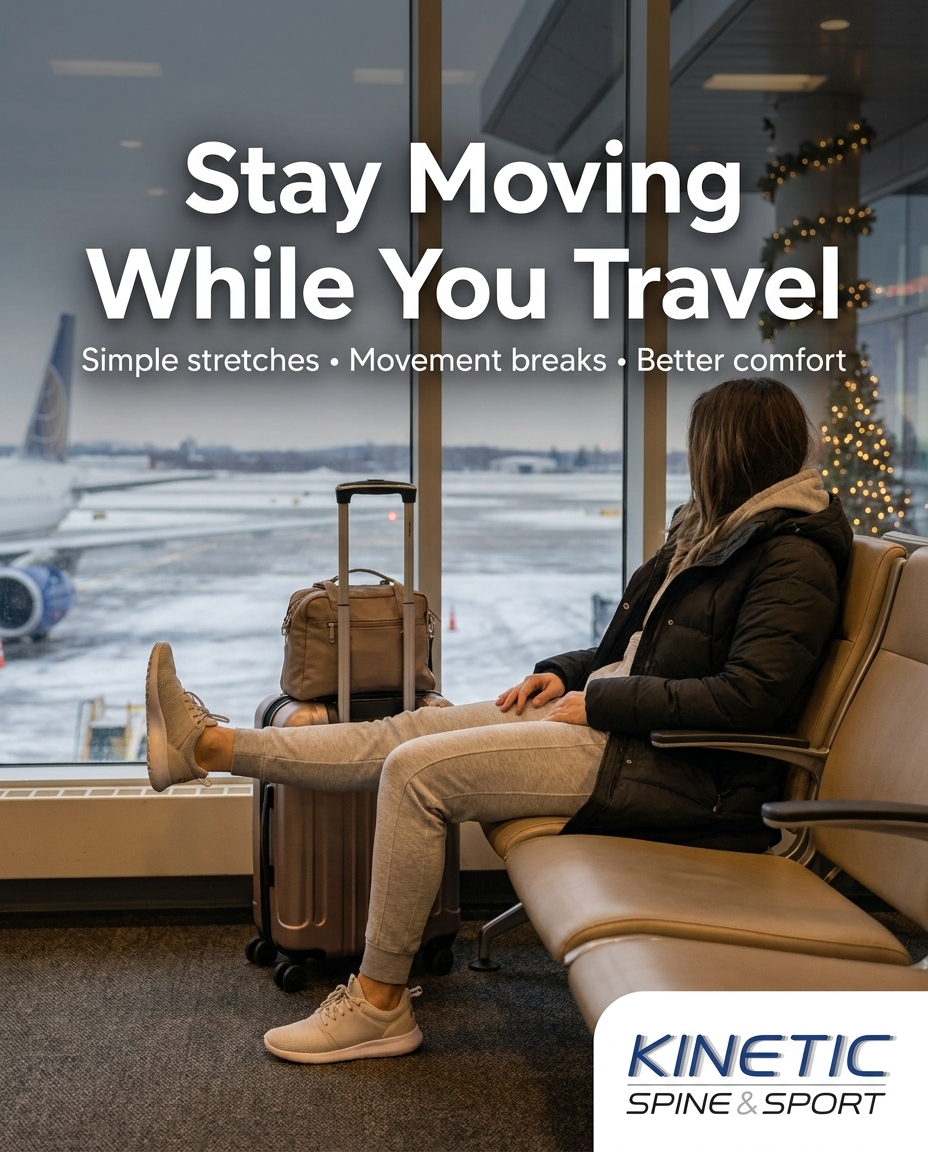
Holiday Travel Stretches and Posture Tips for the Road
Holiday travel can be a highlight of the season, but hours in a vehicle or airplane seat may leave your body feeling tight before you reach your destination. Whether you are driving to see family or flying for a holiday trip, staying in the same position for too long can place added stress on your muscles and joints.
The good news is that staying more comfortable does not require a complicated routine. A few simple stretches, brief movement breaks, and regular posture shifts can help reduce stiffness along the way. Taking a minute or two to move each hour can help you arrive feeling more relaxed, mobile, and ready to enjoy time with the people you care about.
Why Travel Can Cause Stiffness and Discomfort
Long periods of sitting can affect the body more than people often realize. In a car or airplane seat, the hips stay bent while the upper body may gradually round or lean forward. Over time, this position can contribute to tight hip flexors, low back pain, neck pain, shoulder tension, and discomfort through the chest.
When muscles are not moving through their usual range of motion, they can begin to feel less flexible. After several hours of travel, it is common to stand up and notice joint pain or stiffness in the hips, back, and neck. Regular movement throughout the day can help limit that discomfort before it lingers.
Stretching During a Long Road Trip
Hours behind the wheel can make muscles feel restricted and leave joints less mobile. Planning to use fuel stops, rest areas, and other breaks as movement opportunities is one of the easiest ways to support better mobility during a road trip.
When you step out of the car, try a runner’s lunge to gently lengthen the hip flexors after sitting. A short stretch may help restore some comfortable movement before you return to the driver’s seat.
You can also use a wall or other steady surface to offset the forward posture that often develops while driving. Place your hands on the surface, reach upward, and gently bring your chest forward. This movement can help open the front of the body and reduce tightness across the chest and shoulders.
A chest stretch is another useful option. Stand beside a doorway or wall with your elbows bent to about 90 degrees and your forearms supported against the surface. Slowly lean forward until you feel a mild stretch through the chest. This can help counter rounded shoulders after a long drive.
Small posture resets can also be helpful while you are seated, as long as they can be done safely without taking attention away from the road. Gently drawing your shoulder blades together from time to time can discourage slumping and support better movement during the trip.
Ways to Stay More Comfortable on a Flight
Flying creates many of the same challenges as driving, often with fewer chances to change positions. Sitting in a limited space for several hours can leave joints stiff and may slow circulation in the lower body.
A brief movement routine about once an hour can make a meaningful difference. Slowly move your neck in each direction and roll your shoulders forward and backward to ease upper-body tension that can develop during a flight.
Your hips benefit from movement, too. Bringing one knee gently toward your chest at a time can help loosen the muscles that tighten when you have been seated for an extended period.
Do not forget about your feet and ankles. Ankle circles and gentle foot pumps can encourage circulation and help keep the lower legs from feeling as stiff after landing. These movements take very little room, yet they can improve comfort over the course of the journey.
Pay Attention Changing Your Postures While You Travel
Stretching is only one part of staying comfortable during holiday travel. Having consistent posture shifts can also reduce the strain that builds in the neck and upper back during a long drive or flight.
One common travel habit is allowing the head to drift ahead of the shoulders while looking at the road, reading, or scrolling on a phone. The farther forward the head moves, the harder the neck muscles must work to support it. Over time, that added workload can contribute to tightness in the neck, shoulders, and upper back.
Whenever possible, aim to keep your ears stacked over your shoulders. This straightforward adjustment can reduce unnecessary strain and encourage more comfortable positions.
A gentle chin tuck can also serve as a quick posture reset. Bring your chin slightly back, hold for a few seconds, then relax. Repeating this movement periodically may help ease neck tension before it becomes more noticeable.
Brief Movement Breaks Support Better Mobility
Travel stretches do not require equipment, a gym, or a large amount of time. Most can be done in one or two minutes, making them practical for a busy holiday travel schedule.
Whether you are stopping at a rest area, waiting in an airport, or seated on a long flight, short breaks can help keep your muscles active instead of allowing them to become increasingly tight. Moving regularly throughout the day often provides more relief than waiting until the trip is over.
Making movement part of your travel routine can help you reach your destination feeling more comfortable and ready to enjoy holiday gatherings. It is a simple way to support movement health when your normal routine is temporarily interrupted.
When to Consider Chiropractic Care
For many people, travel-related stiffness improves within a day or two after returning to regular activity. Gentle stretching, improved posture, and consistent movement can often help the body settle back into its normal rhythm.
However, discomfort that continues after the trip, restricts your range of motion, or does not improve may deserve professional attention. Ongoing low back pain, neck pain, shoulder pain, sciatica, or joint pain can be a sign that temporary stretching alone is not enough to restore comfortable movement.
At Kinetic Spine & Sport, our Mankato chiropractic team provides individualized chiropractic care for people dealing with pain, movement restrictions, injury recovery, and everyday mobility concerns. Dr. Luke Weber may use chiropractic adjustments, manual therapy, soft-tissue mobilization, exercises, and other approaches based on your needs.
If holiday travel leaves you with lingering stiffness or pain, Kinetic Spine & Sport can help you take the next step toward more comfortable movement. Contact our Mankato, Minnesota practice for a personalized evaluation and guidance designed to help you move, function, and feel your best.